
Financial Education
for the Digital Age
Finance Freedom Guide provides the comprehensive financial education missing from traditional systems. Through meticulously crafted books and actionable insights, we equip you with the mindset, strategies, and systems to build sustainable wealth in today's evolving economy.
5 Money Beliefs You Must Delete to Become Wealthy
These subconscious programs are silently sabotaging your wealth potential
Most financial struggles do not begin in bank accounts.
They begin in the mind.
Long before people learn how to invest, build businesses, or create assets, they develop invisible beliefs about money. These beliefs are often formed during childhood through family conversations, school systems, social environments, and personal experiences.
Over time, those beliefs become automatic.
Some people grow up hearing:
“Money is stressful.”
“Rich people are greedy.”
“Financial success is unrealistic.”
“People like us never become wealthy.”
At first, these phrases seem harmless.
But repeated over years, they quietly shape decisions, habits, confidence, and risk tolerance.
That is why many people work hard for years yet remain financially stuck. Their actions are often controlled by beliefs they never consciously questioned.
I realized this slowly.
For a long time, I thought financial growth was mainly about working harder. But the more I studied wealth creation, investing, entrepreneurship, and human psychology, the clearer something became:
Most people are not only fighting financial limitations.
They are fighting mental programming.
And until those internal beliefs change, external progress often remains limited.
Why Money Beliefs Matter More Than Most People Think
Every financial decision is influenced by belief.
The way people:
spend money
save money
negotiate income
approach investing
handle risk
react to opportunity
is deeply connected to what they believe is possible, safe, or deserved.
This is why two people earning the same income can end up with completely different financial lives.
One person slowly builds assets and financial stability.
The other remains trapped in stress, debt, and reactive decision-making.
The difference is often psychological before it becomes financial.

Belief 1: “Making Money Requires Constant Struggle”
Many people unconsciously associate wealth with exhaustion.
They believe:
more suffering equals more success
financial freedom must take decades
work must always feel painful
rest means laziness
This belief creates burnout-driven financial behavior.
People begin optimizing only for effort instead of leverage.
But modern wealth is increasingly built through:
systems
automation
digital assets
scalable skills
long-term investing
intellectual leverage
Hard work still matters.
But effort without strategy often leads to survival, not freedom.
Some of the most financially successful people focus less on working endlessly and more on building systems that continue creating value over time.
That shift changes everything.
Belief 2: “I’m Just Bad With Money”
This is one of the most damaging financial identities people adopt.
When someone repeatedly says:
“I’m terrible with money.”
their brain begins acting consistently with that identity.
They stop trying to improve.
They avoid learning financial skills.
They ignore opportunities to grow.
But financial intelligence is rarely something people are born with.
It is usually learned gradually through:
education
mistakes
repetition
self-awareness
systems
Most financially confident people were once beginners too.
The difference is they decided financial improvement was a skill they could build rather than a fixed personality trait.

Belief 3: “Saving Money Alone Will Make Me Wealthy”
Saving money is important.
But saving alone is rarely enough to create long-term wealth.
This belief keeps many people trapped in defensive financial behavior for years.
They become excellent at reducing expenses but never learn:
investing
asset ownership
income expansion
digital leverage
business creation
long-term compounding
Money sitting still usually loses purchasing power over time because of inflation.
Wealth is typically built when money begins working alongside you through:
investments
businesses
assets
scalable systems
Saving creates stability.
Investing and ownership create growth.
Both matter.
But confusing one for the other limits financial progress.
Belief 4: “Rich People Are Greedy”
Many people subconsciously reject wealth because they associate money with corruption or selfishness.
This creates internal conflict.
They desire financial freedom while simultaneously believing wealthy people are morally flawed.
The mind struggles to pursue what it secretly rejects.
In reality, money simply amplifies character.
Wealth can be used selfishly or responsibly.
Financial success allows people to:
support families
create opportunities
invest in ideas
solve problems
donate generously
build meaningful projects
gain freedom over time and decisions
Money itself is neutral.
What matters is how people use it.
Developing a healthier relationship with wealth often begins by separating money from negative stereotypes.

Money itself is neutral.
What matters is how people use it.
Developing a healthier relationship with wealth often begins by separating money from negative stereotypes.
Belief 5: “It’s Too Late for Me”
This belief quietly destroys momentum before progress even begins.
People compare themselves to:
successful entrepreneurs
investors
creators
wealthy friends
social media lifestyles
Then they conclude:
“I’m already behind.”
But financial growth is not a race with identical timelines.
Many people build financial stability later than expected.
Others restart completely after failure, debt, career changes, or difficult periods of life.
What matters most is not where someone begins.
It is whether they begin building intelligently and consistently.
Long-term financial progress often looks slow at first.
Then compounding changes the trajectory dramatically.
The Hidden Danger of Social Conditioning
Many limiting money beliefs are socially reinforced.
Society often rewards:
consumption over ownership
appearance over stability
short-term pleasure over long-term planning
People are encouraged to look financially successful before becoming financially secure.
This creates dangerous cycles:
lifestyle inflation
debt dependency
emotional spending
comparison-driven decisions
Breaking these patterns requires conscious thinking.
Wealth usually grows quietly.
Most financially stable people are not trying to appear rich every day.
They are building systems and assets behind the scenes.
Replacing Destructive Beliefs With Better Ones
Deleting limiting beliefs is not about fake positivity.
It is about replacing harmful mental patterns with more accurate and constructive thinking.
Examples:
Instead of:
“I’ll never understand money.”
Replace it with:
“Financial skills can be learned step by step.”
Instead of:
“I need to work endlessly to survive.”
Replace it with:
“I can gradually build systems that create leverage.”
Instead of:
“Wealth is only for lucky people.”
Replace it with:
“Long-term consistency and intelligent decisions matter.”
Small mental shifts often create massive behavioral changes over time.
The Wealth Mindset Shift
People who gradually improve financially often stop thinking only like workers and begin thinking like builders.
They focus more on:
ownership
leverage
systems
skills
adaptability
long-term thinking
They ask different questions:
How can I create assets?
How can I increase my value?
How can I automate progress?
How can I make better long-term decisions?
How can I reduce emotional financial behavior?
These questions slowly reshape financial outcomes.
Final Thoughts
Most people never examine the beliefs controlling their financial behavior.
They focus only on external problems while ignoring the internal patterns shaping every decision they make.
But wealth creation is rarely only mathematical.
It is behavioral.
Psychological.
Systematic.
Deleting destructive money beliefs does not instantly create financial success.
But it removes invisible barriers that silently block growth for years.
Because before people build wealth externally, they usually need to rebuild the way they think internally.
And often, that is where real financial transformation begins.

The system is broken. Traditional academia prepares you for employment, not financial independence. It teaches compliance rather than capital allocation, memorization over monetization. The real world financial education the kind that builds generational wealth happens in the margins: through mentorship, failure, self study, and learning by doing.
We’re here to close that gap. Finance Freedom Guide transforms decades of entrepreneurial and investment experience into structured roadmaps.
Whether you’re buried in debt or ready to scale digital assets, we believe financial intelligence is a learned skill not a genetic gift.
Our Mission;
Turn knowledge, creativity, and expertise into perpetual wealth systems. No fluff, no get rich quick fantasies just proven frameworks and the mindset shift required to break free from the 9‑5.

Bestseller
Navigate markets with strategic precision, balancing risk and opportunity across emerging asset classes.
Top Rated
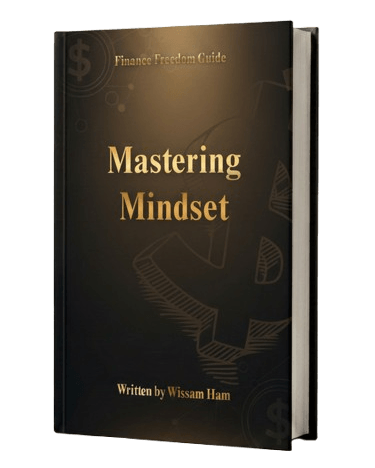
Cultivate the psychological architecture required for extraordinary wealth accumulation.

Reader's Choice
Where mindset, strategy, and technology converge to create exponential wealth in the digital age. Latest release.
Reader's Choice
Where mindset, strategy, and technology converge to create exponential wealth in the digital age. Latest release.
Top Rated
Cultivate the psychological architecture required for extraordinary wealth accumulation.
Bestseller
Navigate markets with strategic precision, balancing risk and opportunity across emerging asset classes.
AliExpress Deals for Freelancers
We hand pick products based on real freelancer needs.
Low Cost High Productive Setup Picked Carefully To Start Practicing our eBooks Content & Build Your Online Income Streams.













Need more than a eBook?
We don’t just give generic tips. We diagnose your unique financial situation, build a custom action plan, and walk with you step by step via daily email. No calls, no fluff.

Wissam Ham isn't just another financial expert he's a living testament to the power of mindset transformation. After climbing from financial uncertainty to creating multiple streams of passive income, he's dedicated his life to teaching others the exact principles that liberated him.
What makes Wissam different? He understands that true wealth begins between your ears. While others teach complicated investment strategies, Wissam focuses on the psychological foundation that makes those strategies actually work for you.

`The Art of Wealth Creation
Transforming financial mindsets through premium education, exclusive insights, and proven wealth building strategies.
Contact



© 2026 Finance Freedom Guide. All rights reserved.
Created by Wissam Ham | Financial Education for the Digital Age