
Financial Education
for the Digital Age
Finance Freedom Guide provides the comprehensive financial education missing from traditional systems. Through meticulously crafted books and actionable insights, we equip you with the mindset, strategies, and systems to build sustainable wealth in today's evolving economy.
How AI Prompts Can Multiply Your Productivity
From typing commands to conducting symphonies of AI-driven productivity
The first time I used AI seriously, I made the same mistake most people make.
I treated it like a search engine.
Short questions.
Vague instructions.
Random requests.
And the results felt average.
Sometimes useful.
Often generic.
Then I noticed something interesting.
Two people could use the exact same AI tool and get completely different outcomes.
One person produced:
better writing
faster workflows
smarter systems
clearer ideas
higher productivity
While the other stayed stuck with shallow results.
The difference was not the AI itself.
The difference was communication.
More specifically:
prompts.
And once I understood that, I realized something important:
AI is no longer only a tool.
It behaves more like a digital collaborator.
But the quality of collaboration depends heavily on how clearly you think and communicate.
Why Most People Use AI Inefficiently
Most people give AI weak instructions.
They type things like:
“write an article”
“give me ideas”
“make this better”
“help me work faster”
The problem is that vague inputs usually create vague outputs.
Research and industry guidance around prompt engineering consistently show that structured prompts with context and constraints produce better results.
AI systems respond strongly to:
clarity
structure
context
examples
constraints
goals
The better the instruction, the better the collaboration.

AI Prompts Are Becoming a Modern Skill
A few years ago, prompt engineering sounded technical.
Today, it is becoming practical.
People now use AI prompts for:
writing
business planning
coding
research
productivity
education
automation
marketing
financial analysis
Even major AI platforms now emphasize structured prompting as part of effective AI usage.
This matters because AI is increasingly integrated into modern work.
And people who learn how to communicate effectively with AI may gain significant advantages over time.
The Hidden Truth About Productivity
Most productivity problems are not caused by laziness.
They are caused by:
confusion
unclear thinking
mental overload
scattered systems
poor prioritization
AI can help reduce friction dramatically.
But only when prompts guide the AI clearly.
For example, instead of asking:
“Help me organize my day.”
A stronger prompt becomes:
“Act as a productivity strategist. Organize my tasks into deep work, shallow work, and high-priority actions. Build a realistic schedule with breaks and energy management.”
That single change creates much higher-quality output.
Because AI performs better when the objective becomes specific.
Good Prompts Reduce Mental Friction
One of the biggest advantages of AI is reducing cognitive load.
People waste enormous mental energy on:
starting tasks
organizing information
summarizing ideas
making decisions
planning workflows
Strong prompts transform AI into:
a thinking assistant
a research partner
a planning system
an idea organizer
a workflow accelerator
This allows people to focus more energy on execution and strategy instead of repetitive mental tasks.
Why Context Changes Everything
AI performs far better when given context.
Without context:
outputs become generic
tone becomes inconsistent
recommendations become shallow
With context:
responses become strategic
outputs become personalized
workflows become more useful
OpenAI’s own prompt engineering documentation emphasizes the importance of structured instructions and contextual information for stronger outputs.
For example:
Instead of:
“Write a blog intro.”
Use:
“Write a blog introduction about financial discipline using storytelling, emotional tension, simple language, and trust-focused SEO style.”
Specificity improves outcomes dramatically.
The Psychology Behind Better Prompting
Most people think prompting is only technical.
But prompting is actually psychological too.
Good prompting requires:
clarity of thought
logical structure
strategic communication
understanding outcomes
In many ways, prompting forces people to think more clearly themselves.
Because unclear thinking creates unclear instructions.
And unclear instructions create weak results.
This is one reason skilled AI users often become faster thinkers over time.
AI Works Better With Roles
One of the simplest ways to improve prompts is assigning roles.
For example:
“Act as a financial strategist”
“Act as an editor”
“Act as a productivity coach”
“Act as a systems designer”
Role prompting helps AI generate more focused outputs.
This technique is commonly recommended in professional prompting frameworks because it improves consistency and direction.
Roles create context instantly.
Why Prompt Structure Matters
The strongest prompts usually include:
a role
a clear task
context
constraints
desired format
desired outcome
For example:
Weak Prompt
“Help me write.”
Strong Prompt
“Act as a professional editor. Rewrite this article in a clear, trust-building tone optimized for SEO, readability, and storytelling. Avoid hype and keep sentences concise.”
The second prompt produces significantly better outputs because expectations are clear.
AI Is Multiplying Creative Output
One of the most powerful uses of prompting is creative acceleration.
AI can help:
brainstorm ideas
expand outlines
generate systems
rewrite drafts
improve structure
simplify complexity
This does not replace human creativity.
It amplifies it.
People who combine:
human judgment
creativity
strategic thinking
AI prompting
often increase output dramatically.
Why Most AI Content Feels Generic
You can usually recognize low-quality AI content instantly.
It often sounds:
repetitive
shallow
emotionally empty
over-optimized
robotic
This usually happens because prompts lack:
specificity
emotional direction
strategic intent
examples
context
Better prompts create more human, nuanced, and valuable outputs.
The quality of AI content often reflects the quality of the thinking behind the prompt itself.

Reverse Prompting Is a Powerful Technique
One increasingly popular method is reverse prompting.
Instead of asking AI:
“Write something good.”
You show an example and ask:
“What prompt would generate writing with this structure, tone, and style?”
Discussions in AI communities describe reverse prompting as a way to analyze tone, structure, pacing, and emotional style more effectively.
This technique helps creators build more consistent outputs over time.
AI Prompts Can Build Entire Systems
The real power of AI is not single prompts.
It is systems.
People now build:
content systems
research workflows
productivity frameworks
automated processes
idea generation pipelines
AI-assisted businesses
Strong prompting creates repeatable systems instead of random interactions.
And systems scale far better than isolated effort.
Why Human Judgment Still Matters
AI is powerful.
But it still requires:
critical thinking
editing
emotional intelligence
ethical judgment
strategic direction
The best AI users do not blindly accept outputs.
They refine them.
Improve them.
Question them.
AI increases leverage.
But humans still guide direction and meaning.
The Future Belongs to AI Collaborators
The future may not belong to people competing against AI.
It may belong to people learning how to collaborate with it effectively.
Because AI rewards:
adaptability
communication
structured thinking
creativity
systems design
The people who learn these skills early may gain enormous advantages in productivity and opportunity.

How to Improve Your AI Prompts
You do not need advanced technical knowledge to improve.
Start with simple upgrades.
Give Clear Roles
Tell AI who it should act like.
Add Context
Explain goals, audience, tone, and constraints.
Be Specific
Detailed prompts outperform vague instructions.
Use Iteration
Improve prompts gradually instead of expecting perfection immediately.
Build Reusable Systems
Save prompts that consistently produce strong results.
Prompting improves through repetition.
Final Thoughts
AI prompts are becoming one of the most important modern productivity skills.
Because AI itself is only part of the equation.
The real advantage comes from:
clarity
communication
structure
strategic thinking
system building
People who learn how to direct AI effectively can:
think faster
create faster
organize better
automate workflows
multiply output
Not because AI replaces human intelligence.
But because strong prompts allow humans and AI to work together far more effectively.

The system is broken. Traditional academia prepares you for employment, not financial independence. It teaches compliance rather than capital allocation, memorization over monetization. The real world financial education the kind that builds generational wealth happens in the margins: through mentorship, failure, self study, and learning by doing.
We’re here to close that gap. Finance Freedom Guide transforms decades of entrepreneurial and investment experience into structured roadmaps.
Whether you’re buried in debt or ready to scale digital assets, we believe financial intelligence is a learned skill not a genetic gift.
Our Mission;
Turn knowledge, creativity, and expertise into perpetual wealth systems. No fluff, no get rich quick fantasies just proven frameworks and the mindset shift required to break free from the 9‑5.
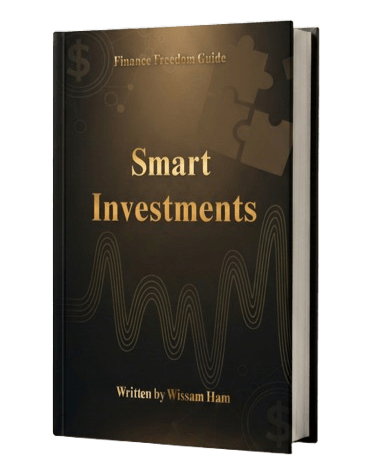
Bestseller
Navigate markets with strategic precision, balancing risk and opportunity across emerging asset classes.
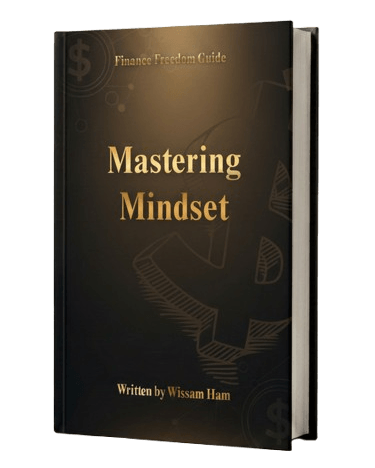
Top Rated
Cultivate the psychological architecture required for extraordinary wealth accumulation.
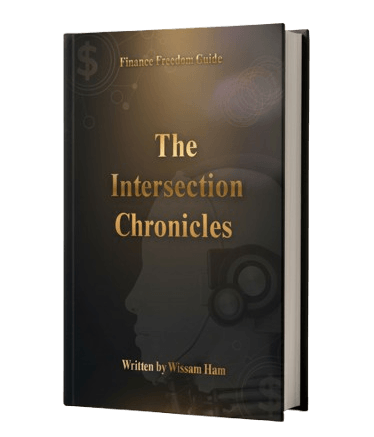
Reader's Choice
Where mindset, strategy, and technology converge to create exponential wealth in the digital age. Latest release.
Reader's Choice
Where mindset, strategy, and technology converge to create exponential wealth in the digital age. Latest release.
Top Rated
Cultivate the psychological architecture required for extraordinary wealth accumulation.
Bestseller
Navigate markets with strategic precision, balancing risk and opportunity across emerging asset classes.
AliExpress Deals for Freelancers
We hand pick products based on real freelancer needs.
Low Cost High Productive Setup Picked Carefully To Start Practicing our eBooks Content & Build Your Online Income Streams.













Need more than a eBook?
We don’t just give generic tips. We diagnose your unique financial situation, build a custom action plan, and walk with you step by step via daily email. No calls, no fluff.

Wissam Ham isn't just another financial expert he's a living testament to the power of mindset transformation. After climbing from financial uncertainty to creating multiple streams of passive income, he's dedicated his life to teaching others the exact principles that liberated him.
What makes Wissam different? He understands that true wealth begins between your ears. While others teach complicated investment strategies, Wissam focuses on the psychological foundation that makes those strategies actually work for you.

`The Art of Wealth Creation
Transforming financial mindsets through premium education, exclusive insights, and proven wealth building strategies.
Contact



© 2026 Finance Freedom Guide. All rights reserved.
Created by Wissam Ham | Financial Education for the Digital Age